

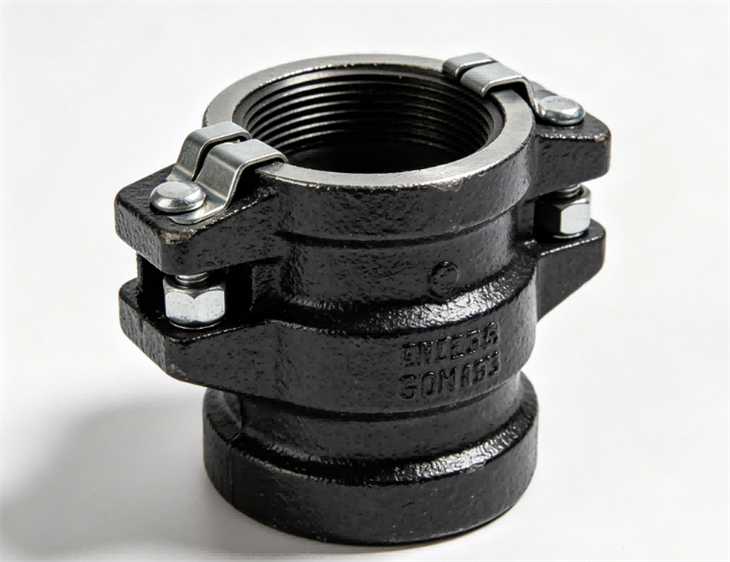


Products Description
Self-locking joint ductile iron socket fittings provide instant thrust restraint. No bolts, no welding, no concrete thrust blocks. Push the pipe in. The joint locks itself.

Key Technical Specifications
| Item | Specification |
|---|---|
| Fitting Type | Self-Locking Joint Socket Fittings (Restrained Push-On) |
| Available Shapes | Bend, Tee, Reducer, Blind End, Plug, Adaptor |
| Nominal Size | DN80 – DN2000 |
| Pressure Rating | PN10 / PN16 / PN25 / PN40 |
| Joint Type | Self-Locking (Automatic Restrained Seal) |
| Material | Ductile Iron EN-GJS-400-15 (ASTM A536 65-45-12) |
| Gasket Material | EPDM (Water) / NBR (Oil) / FKM (Chemicals) |
| Locking Mechanism | Spring-loaded stainless steel teeth or grip rings |
| Deflection Capability | Up to 3-5 degrees (depending on size) |
| Inner Lining | Cement Mortar / HAC / Epoxy / Polyurethane |
| Outer Coating | Blue Epoxy / Bitumen / Zinc + Epoxy |
| Standards | EN 545 (Water) / EN 598 (Sewage) / ISO 2531 |
Product Features
Push the Pipe In. The Joint Locks Itself.
No set screws to tighten. No locking segments to insert. No special tools. Just lubricate the gasket and push the pipe into the socket. Spring-loaded stainless steel teeth grip the pipe automatically.
Instant Thrust Restraint Saves Hours of Work
Standard push-on joints need concrete thrust blocks at bends, tees, and blind ends. Self-locking joints do not. The joint resists pull-out pressure immediately. No concrete. No curing time. No extra excavation.
One-Piece Socket Design – Nothing to Lose or Forget
The locking mechanism sits inside the socket. You cannot lose it. You cannot forget to install it. The fitting arrives ready to use. Your crew just pushes the pipe.
Works with Standard Plain End Ductile Iron Pipe
No special pipe ends. No grooves. No welded rings. Any standard ductile iron pipe from any manufacturer works with our self-locking socket fittings.
Stainless Steel Gripping Teeth for Long Life
The locking teeth are stainless steel. They do not rust. They do not lose their spring force. They grip the pipe securely for the life of the pipeline.
Application & Scope
Pipeline Bends (Horizontal and Vertical) – Water pressure pushes bends. Self-locking joints resist that force. No concrete thrust block needed.
Tee Branches – The branch outlet creates unbalanced pressure forces. Self-locking joints hold the tee in place. No thrust block at the branch.
Blind Ends (Caps and Plugs) – Full water pressure pushes against a blind end. Self-locking joints hold the cap. No concrete needed.
Valve Connections – Fast valve closure creates pressure surges. Self-locking joints on both sides of the valve restrain the assembly.
Reducers at Pump Stations – Pump discharge creates sudden pressure changes. Self-locking reducers handle thrust without blocks.
River Crossings (Directional Drilling) – Pulled pipelines need restrained joints for the entire pulled length. Self-locking joints allow pulling without field welding.
Seismic Zones – The joint flexibility absorbs ground movement. The automatic locking stays engaged even when the joint deflects.
Rocky or Poor Soil Areas – Concrete thrust blocks need good soil for bearing. Self-locking joints need no bearing soil. They work anywhere.
Urban Areas with Limited Excavation Space – Thrust blocks need large excavations. Self-locking joints fit in the standard trench. No extra digging.
Frost-Prone Areas – Thrust blocks can heave in freezing soil. Self-locking joints move with the soil. No block to heave.
Materials & Standards Compliance
| Component | Standard Material | Specification | Upgrade Option |
|---|---|---|---|
| Fitting body | Ductile Iron EN-GJS-400-15 | 400 MPa tensile, 15% elongation | EN-GJS-500-7 (higher strength) |
| Rubber gasket | EPDM (drinking water approved) | Shore A 70-75, WRAS or NSF | NBR, FKM (Viton) |
| Locking teeth | Stainless steel (301 or 304) | Spring-tempered, sharp edges | SS316 (salt water) |
| Gasket retainer | Ductile iron or stainless steel | Holds gasket in position | Stainless steel |
| Lubricant (if supplied) | Water-based, non-toxic | For EPDM gaskets | Silicone-based (special order) |
Standards We Comply With:
EN 545 – Ductile iron fittings for water supply (including restrained joints)
EN 598 – Ductile iron fittings for sewerage
ISO 2531 – International standard for ductile iron pipes and fittings
EN 681-1 – Rubber gasket materials
Accessories
EPDM Gaskets (Pre-Lubricated) – One gasket per self-locking joint. Pre-lubricated with water-based lubricant. Ready to install.
Stainless Steel Teeth Ring (Spare) – The spring-loaded gripping ring. One ring per joint included. Spare rings available for field backup.
Gasket Lubricant (Tub) – Water-based, non-toxic. Safe for drinking water. Will not damage EPDM. One tub per 50 joints.
Installation Tool Kit – Includes lubricant brush, marking gauge for insertion depth, and pipe alignment guide.
Disassembly Tool (Release Tool) – Special tool that releases the stainless steel teeth. Allows joint disassembly for maintenance or pipeline modification. Slips between the pipe and socket.
Pipe-End Lubricant Wipers – Attaches to pipe before insertion. Wipes lubricant onto the pipe surface as it enters the socket. Ensures even coating.
Depth Marking Gauge (Wrap-Around) – Tool for marking the correct insertion depth on the pipe before assembly. Prevents under-insertion or over-insertion.
Optional Configurations
Flanged Adaptor (Self-Locking on One End, Flanged on Other) – Connect self-locking restrained pipeline to flanged equipment (pumps, valves, strainers).
Self-Locking to Plain Pipe Adaptor – Plain pipe end on one side, self-locking socket on the other. For connecting restrained sections to unrestrained sections.
SS316 Teeth Ring for Salt Water – For corrosive environments. Stainless steel 316 resists pitting and crevice corrosion.
Teflon-Coated Teeth (Low Friction) – For very soft pipe coatings. Reduces insertion force while maintaining grip.
Performance Testing
Hydrostatic Pressure Test (Shell) – Fill fitting body with water. Pressurize to 1.5x rated pressure (PN16 → 24 bar). Hold for 60 seconds. No water through casting wall. No porosity. No weeps.
Gasket Seal Test (Assembly Test with Pipe) – Assemble self-locking joint to a plain pipe sample. Pressurize to 1.25x rated pressure. Hold for 5 minutes. No water leakage past the gasket.
Pull-Out Resistance Test – Assemble self-locking joint to pipe sample. Apply axial tension force. Force requirement: 2x rated pressure times cross-section area. Joint must not pull apart. Teeth must hold.
Deflection Test – Assemble self-locking joint to pipe sample. Deflect to 5 degrees (or design maximum). Pressurize to rated pressure. No joint separation. No gasket leakage. Teeth stay engaged.
Insertion Force Test – Measure force required to push pipe into socket. Must be within reasonable range (typically 2-10 kN depending on size). Teeth must not damage pipe coating.
Lining Thickness Test – Measure at six points inside fitting. Minimum thickness per EN 545 or EN 598.
Application Advantage
Calculation: Pressure (16 bar = 1.6 MPa) × Cross-section area (0.125 m²) = 200,000 Newtons (about 20.4 tons of force). That bend wants to move.
Conventional Solution:
Excavate a large hole (2.5m x 2.5m x 1.5m) around the bend
Build wooden forms
Place steel reinforcing bars
Pour 4 cubic meters of concrete
Wait 7 days for concrete to cure
Backfill
Total cost: $800+ in materials and labor. Time: 7+ days of schedule.


