

Valve
Your Professional Valve Supplier
JINCHENG TIANYI CASTING CO., LTD., located in Jincheng, China, specializes in DN80–DN2600 ductile iron pipes, fittings, and gaskets. With 13 years of experience, 300 acres of production area, and over 800 skilled employees, we deliver reliable products for gas, water, drainage, and power projects worldwide.
Extensive Production Capacity
Over 300 acres and semi-automatic mechanized operations ensure stable supply and large-scale project delivery.
Quality Management
Professional quality control team guarantees first-class products, meeting domestic and international standards.
Customer-Oriented Service
Complete pre-sales, in-sales, and after-sales support with customization options for global clients.


Parameter
|
Size Range |
DN50 to DN1200 |
|
Pressure Rating |
PN10, PN16 |
|
Body Material |
Ductile Iron |
|
Seal Material |
EPDM, NBR |
|
Operation Type |
Manual, Gear, Electric |
|
Temperature Range |
-10°C to 120°C |
|
Connection Type |
Flanged |
|
Standards Met |
ISO 5752, ANSI B16.10 |
|
Valve Weight |
Varies by size |
|
Actuator Options |
Multiple choices |
Types of Valve
The valves produced by our company mainly include the following types:
Butterfly Valve
Butterfly valve is a compact, quarter-turn valve that controls fluid flow in pipes using a rotating disc, like a butterfly's wings, making it ideal for quick shut-off, isolation, or throttling in applications from water systems to engines, prized for its simple, lightweight design and lower cost compared to other valves.
Gate Valve
Gate valve is a type of valve that controls fluid flow by lifting a "gate" or wedge-shaped disc out of the flow path to open it, or lowering it to block flow, ideal for fully open/closed isolation in pipes for water, oil, and gas, offering low pressure drop but not good for throttling (partial flow) as it can cause damage.
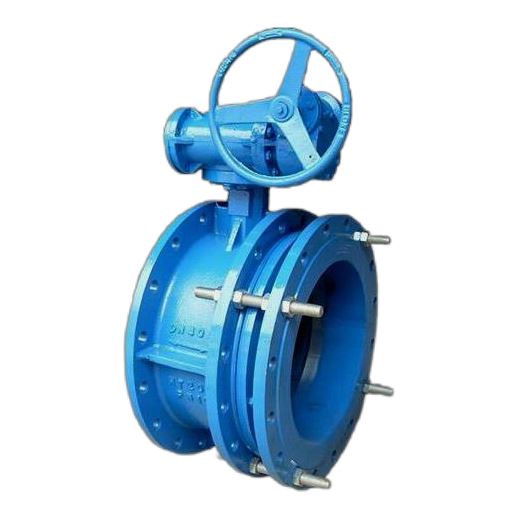
Advantages of Valve

High Reliability
In the early stages of valve design, detailed demand assessments and simulation tests are conducted to ensure that the structure fully meets functional requirements under specific working conditions. This rigorous design strategy significantly reduces the risk of failure during continuous and stable operation.
High Maintenance Convenience
Valve design places strong emphasis on ease of maintenance and practical application. Designers aim to simplify the valve structure by minimizing the number of components, which not only reduces the likelihood of failure but also makes the design more straightforward and user-friendly.


Wide Range of Applications
Valve design often adopts a modular approach, allowing customization based on different media types and specific temperature requirements. This flexible design strategy ensures that valves can operate reliably across a wide range of industrial scenarios.
Low Production Cost
The design process of valves is relatively straightforward, avoiding unnecessary complexity and excessive functional requirements. This simplicity helps save materials and reduce manufacturing costs. The materials commonly used in valve production, such as standard steel, cast iron, and stainless steel, are widely available on the market and relatively affordable.

Valve Manufacturing Methods
Casting: Involves pouring molten metal into a mold where it solidifies into the desired shape which allows the creation of complex shaping and specific details.
Forging: This is the process that involves shaping the metal using compressive forces often at high temperatures. This process results in the final products being stronger and more durable than casted parts.
Different Materials Used for Valves

Cast Iron
This metal is easily machinable with excellent castability properties and is widely used in its pure form or as gray or ductile iron. It is a choice of many because of its strength and high resistance to wear.
Carbon Steel
It is good for valve casting because it is strong and tough enough to withstand pressure therefore suitable for high-pressure equipment. It has a robust material structure that copes well with very demanding applications.
Stainless Steel
When you are dealing with applications where high corrosion resistance is a requirement, then stainless steel is your best option. You can find the valves cast with this material commonly in use in processing industries and marine applications.
Alloy Steels
When an application requires a mix of engineered properties such as hardness, strength, or resistance to heat and corrosion, alloy steels can satisfy such.
Bronze and Brass
These materials possess excellent corrosion and machinability properties. Both bronze and brass are ideal for casting valves that are applied in water industries and any other industry dealing with non-corrosive fluids.
Common Valve Connections And Ends
Screwed or Threaded
Often used in instrument connections or sample points
01
Flanged
The most common ends for piping use
02
Butt Welded
Typically used in high-pressure or high-temperature operations
03
Socket Welded
Commonly used on small bore piping where threaded connections are not permitted
04
Wafer and Lug
Often used for compact valves installed in systems with limited space
05
Customizable Options
| Size Range | DN15–DN2000 |
| Pressure Class | PN10, PN16, PN25, PN40, Class 150–300 |
| Material | Ductile iron, carbon steel, stainless steel |
| Body Standard | EN, ISO, ANSI, AWWA |
| End Connection | Flanged, threaded, welded |
| Color | Blue, red, black, custom |
Packaging and Shipping
|
Packaging |
Each valve wraps securely. Foam padding prevents damage. Strong cartons hold items. Manuals include instructions. Parts lists come inside. |
|
Shipping |
Shipping by sea, by air, by express are acceptable. According to your requirements. |
Our Factory
Tianyi project operation investment of more than 600 million yuan, the company covers an area of 300 acres. The company has more than 800 employees, including 6 professional managers, 18 quality management personnel, 26 professional management team, and 30 sales and after-sales service team.


Our Certificates


FAQ
As one of the most experienced valve manufacturers and suppliers in China, our company offer a wide range of products with superior quality. Please feel free to buy high quality valve for sale here from our factory. Good service and reasonable price are available.